Last Updated: May 2026
If you’re researching e-bikes, you’ve probably seen power ratings like 250 W, 500 W, or even 1,000 W. But many buyers don’t realise these numbers can refer to two very different things: continuous power or peak power. Continuous power is the sustained output a motor can deliver, and it is the number Australian law uses to determine whether an e-bike is road-legal. Peak power refers to the short bursts of extra output a motor provides for hill climbing and acceleration.
Getting these confused can mean the difference between riding a legal bicycle and riding an unregistered motor vehicle. Since 2026, the consequences of getting it wrong have become significantly more serious: NSW has repealed its 500 W exception, police in multiple states can seize and crush non-compliant bikes, and fines in Queensland reach up to $6,700.
This article explains how continuous and peak power work, what Australian law checks for, and how to verify a bike’s rating. For practical buying advice on how to read motor stamps and evaluate performance, see our companion article: Continuous vs Rated Power: What to Check Before You Buy. For the full legal framework, see our hub article: E-Bike Laws in Australia (2026).
- E-bike throttle rules in Australia
- The 1000 W debate: what’s legal and what’s not
- What is EN 15194 certification?
- Do you need insurance for an e-bike?
Disclaimer: This article is for general information purposes only and should not be taken as legal advice. Always check your local laws before riding.
What Is Continuous Power?
Continuous power is the amount of power a motor can sustain during normal use without overheating. It is the clearest indication of how your e-bike will perform day to day, and it is the standard used to determine whether a bike is road-legal.
The legal limit for continuous power is 250 W in every Australian state and territory. NSW was the only state that previously allowed up to 500 W, but that exception was repealed in March 2026. All states now follow the same 250 W standard.
The continuous rating is set by the manufacturer and stamped on the motor housing. It reflects the motor’s thermal limits and engineering constraints. It is a conservative, reliable figure, not a momentary spike.
If you’ve used a Lime bike or similar shared e-bike, you’ve experienced a 250 W continuous motor. That is the baseline for what a legal e-bike feels like. Quality private-ownership e-bikes deliver a noticeably better experience than shared bikes at the same wattage, because they use better controllers, sensors, and drivetrains.
What Is Peak Power?
Peak power is the maximum power your e-bike motor can deliver in short bursts, typically lasting a few seconds. You feel it when accelerating from a stop, pulling away from traffic lights, or climbing a steep hill.
A quality 250 W continuous motor can deliver peak bursts of 400 W to 600 W. This is why a legal e-bike can feel punchy and responsive despite the modest continuous rating. The motor briefly draws more current than it can sustain long-term, producing a surge of power before heat forces it to settle back.
Both numbers matter, but for different reasons:
- Continuous power determines legality and sustained performance
- Peak power determines how the bike feels in the moments that matter most: starts, hills, and acceleration
What Australian Law Checks
Australian law uses continuous rated power to classify e-bikes. The rules are the same in every state and territory as of 2026:
- 250 W maximum continuous rated power (the number stamped on the motor)
- 25 km/h pedal-assist cut-off (motor stops helping at this speed)
- Pedal-assist only (throttle limited to 6 km/h walk-assist)
If a bike meets these requirements, it is classified as an Electrically Power-Assisted Cycle (EPAC) and treated as a bicycle. No registration, no licence, no compulsory insurance.
If the motor’s continuous rating exceeds 250 W, or the bike allows motor-assisted cruising above 25 km/h, or the throttle operates independently above 6 km/h, the bike is classified as a motor vehicle. Fines, seizure, and insurance consequences apply.
Peak power above 250 W is perfectly legal, as long as the continuous rating stays at or below 250 W. A motor that delivers 450 W peak from a 250 W continuous base is fully compliant.
For state-specific details, see our guides for NSW, Victoria, Queensland, Western Australia, South Australia, and the ACT.
Why “Digitally Limited” Motors Are Not Legal
Some manufacturers sell e-bikes with 750 W or 1,000 W continuous motors and claim they are “digitally restricted to comply with the legal power limit.” This does not work under Australian law.
The legislation defines continuous power as the rating of the motor by the manufacturer, regardless of any digital restriction. Queensland’s official regulations explicitly prohibit e-bikes with motors larger than 250 W that are “locked” or electronically limited (QLD Government). Victoria’s position is identical: any e-bike with a toggle or mechanism to override the power limits is illegal (VicRoads).
The reason is straightforward: software can be changed in minutes. The motor stamp cannot. Authorities, insurers, and courts rely on the hardware rating, not a changeable setting.
If you’re chasing more power than the 250 W legal limit allows, the appropriate path is a registered electric moped or motorcycle. E-bikes are designed to comply with strict rules, and exceeding them creates legal, insurance, and safety problems.
How to Check a Motor’s Power Rating
Most reputable motors (Bosch, Shimano, Bafang, and others) have the continuous power rating clearly marked on the motor housing. Look for:
- The motor stamp: A code like “RM G062.250.D” where “.250.” denotes 250 W continuous
- The rating plate: A sticker or engraving showing continuous rated power in watts
- The QR code: Scanning this should open the manufacturer’s record confirming the specifications
If the bike carries EN 15194 certification, the label will also show the manufacturer’s name, “EPAC according to EN 15194,” the cut-off speed (25 km/h), a serial number, and the CE mark. This is the most comprehensive proof that the bike meets Australian requirements.
For a detailed walkthrough of how to read motor stamps and what to check at the shop, see our companion article: Continuous vs Rated Power: What to Check Before You Buy.
Peak Power and Torque: What Determines Ride Feel
For riders who care about how a bike performs (not just whether it’s legal), two numbers matter beyond continuous power: peak output and torque.
Peak output determines how responsive the bike feels during starts and hill climbs. A higher peak-to-continuous ratio means more noticeable surges of power when you need them. A 250 W motor with 450 W peak will feel livelier than a 250 W motor with 350 W peak.
Torque (measured in Nm) determines turning force at the wheel. On steep hills, with cargo, or from a standstill, torque is what gets you moving smoothly. Two 250 W motors can feel very different because one delivers 35 Nm and the other 50 Nm.
As a general guide for 250 W motors:
- 30 to 40 Nm: Adequate for flat to moderate terrain
- 40 to 50 Nm: Good for suburban riding with moderate hills. The sweet spot for most commuters
- 50 Nm and above: Strong hill-climbing ability, suited to hillier terrain or heavier loads
When comparing bikes, look at peak power and torque alongside the continuous rating. The continuous number determines legality. Peak and torque determine how the bike actually feels to ride.
The 2026 Enforcement Reality
The distinction between continuous and peak power has always mattered legally. What has changed in 2026 is that enforcement is catching up.
NSW repealed its 500 W allowance in March 2026 and introduced seizure and crushing powers. Police are trialling portable dyno units for roadside motor testing. Operation Kilowatt on Sydney’s Northern Beaches issued fines of $818 per offence for non-compliant bikes.
Victoria Police ran Operation Consider in Melbourne’s CBD in 2025, finding that 52% of e-bikes intercepted were overpowered. Fines of $1,018 apply for operating an unregistered vehicle.
Queensland has introduced legislation (expected to pass by July 2026) with fines from $330 to $6,700, seizure and destruction powers, and a licensing requirement for riders over 16.
The Federal Import Ban (December 2025) prevents non-compliant e-bikes from entering Australia. The supply of overpowered bikes is declining at the source.
The message is consistent across every state: the motor stamp is what matters, peak power is fine as long as continuous stays at 250 W, and “digitally limited” does not count.
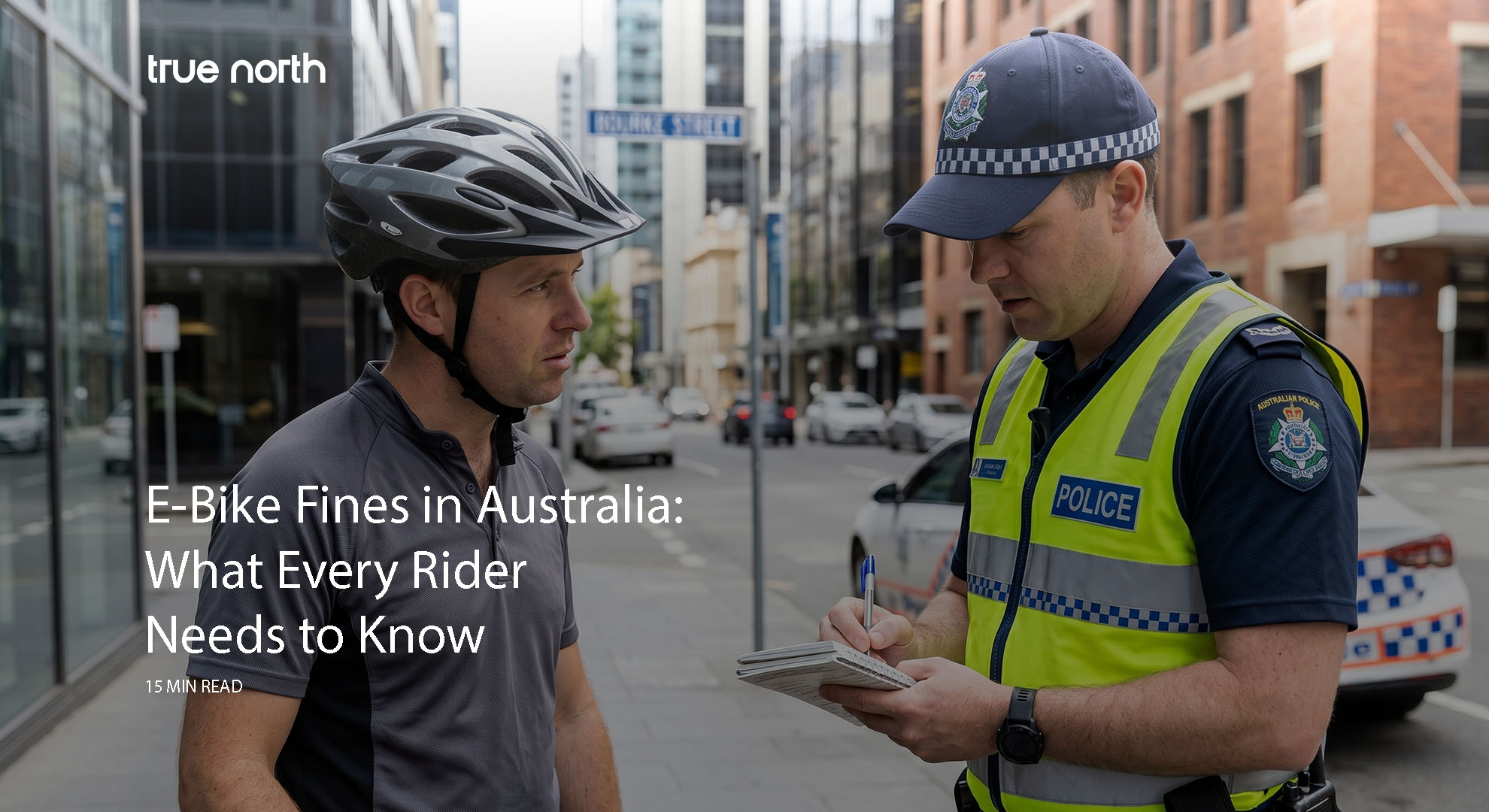
For the full enforcement picture, see our article on e-bike fines and what happens if your bike is illegal.
Frequently Asked Questions
Continuous power is the sustained output a motor can deliver indefinitely without overheating (the legal limit is 250 W in every Australian state). Peak power is the short burst for hills and acceleration (typically 400 W to 600 W on a quality 250 W motor). Australian law measures continuous power. Peak power above 250 W is legal as long as the continuous rating is 250 W or below.
For most urban and suburban riding, yes. A well-tuned 250 W system delivers strong peak bursts for starts and hills. Ride feel depends heavily on torque delivery and controller tuning, not the continuous watt number alone. A 250 W motor with 45 Nm of torque will outperform a cheap 500 W motor with 35 Nm on hills.
No, not for new purchases. NSW was the only state that previously allowed 500 W, and that exception was repealed in March 2026. Existing NSW owners who purchased before March 2026 have a grace period until 1 March 2029. In every other state, 500 W has always been illegal. For any new purchase, 250 W is the only legal option.
No. Australian authorities assess the motor’s designed and marked continuous rating, not software settings. Queensland, Victoria, and NSW have all confirmed that “digitally limited” motors above 250 W are prohibited on public roads.
No. Peak power above 250 W is perfectly legal as long as the continuous rated power (the motor stamp) is 250 W or below. A motor that delivers 450 W or 600 W in short bursts from a 250 W continuous base can be fully compliant.
Read the permanent stamp on the motor hub or casing. Look for a code containing the wattage (e.g., “.250.” in the model number) or a rating plate showing continuous rated power. Scan any QR code on the motor to confirm via the manufacturer’s database. For full EN 15194 certification, the label should also show “EPAC according to EN 15194,” the cut-off speed, and the CE mark.
Summary
Continuous power and peak power are two different measurements, and confusing them can lead to buying a bike that isn’t road-legal. Continuous power is the legal yardstick: 250 W in every Australian state and territory as of 2026. Peak power shapes ride feel and is not restricted, as long as the continuous rating stays at or below 250 W.
The enforcement environment has changed. NSW has seizure and crushing powers. Victoria is running crackdowns. Queensland is introducing fines up to $6,700. The Federal Import Ban is clearing non-compliant bikes from the market. “Digitally limited” motors are explicitly rejected by multiple state regulators.
For any new purchase, the smartest choice is a motor stamped 250 W continuous, certified to EN 15194, with a 25 km/h pedal-assist cut-off. This ensures you are road-legal, insurable, and future-proof in every state.
For practical guidance on reading motor stamps and evaluating ride performance, see our companion article: Continuous vs Rated Power: What to Check Before You Buy. For the full legal picture, see our hub: E-Bike Laws in Australia (2026). Or explore our range of EN 15194 certified e-bikes.