Last Updated: June 2026
Power numbers on e-bikes can be confusing. You’ll see 250 W, 500 W, and 1,000 W, and terms like “continuous,” “rated,” and “peak.” If you’re shopping for an e-bike, these numbers matter more than almost anything else on the spec sheet, because they determine whether the bike is road-legal, insurable, and worth your money.
This guide is written for buyers. It explains what continuous rated power actually means, how to read a motor stamp, how controllers shape the ride feel you experience, why torque matters more than watts for performance, and how to spot misleading sales claims before you hand over your money.
For the full legal definitions and state-by-state rules, see our companion article: Continuous vs Peak Power: What It Means for Your E-Bike. For the complete buying decision framework, see our first-timer buyer’s guide.
- E-Bike Laws in Australia (2026)
- How to buy a legal e-bike in Australia
- E-bike throttle rules
- What is EN 15194 certification?
Disclaimer: This article is for general information purposes only and should not be taken as legal advice. Always check your local laws before riding.
What Is Continuous Rated Power?
Continuous rated power is the output a motor can sustain indefinitely without overheating. It is set by the manufacturer, printed on the motor housing or rating plate, and it is the number that Australian regulators, police, and insurers rely on.
Because it reflects thermal limits and real engineering constraints rather than a momentary spike, continuous power is a conservative figure. A motor stamped 250 W can sustain that output all day without damage. It will also produce higher bursts of power for short periods (more on that below), but 250 W is its guaranteed, all-day capability.
In Australia, the legal limit for a road-legal e-bike (EPAC) is 250 W continuous rated power in every state and territory, with one temporary exception: NSW still allows up to 500 W until 1 March 2029, when it moves to the 250 W standard too. A 500 W bike isn’t legal in any other state, so 250 W is the only nationally legal and future-proof choice.
This is the single most important number when buying an e-bike. If the motor stamp reads 250 W, the bike is road-legal nationwide, now and after 2029. A 500 W bike is road-legal in NSW only, and only until 2029. Anything above 500 W is classified as an unregistered motor vehicle everywhere, regardless of any software restriction.
What Is Peak Power and Why Does It Matter for Ride Feel?
Peak power is the short burst you feel when you pull away from the lights or climb a hill. It is higher than the continuous rating and lasts only a few seconds before heat forces the system to settle back.
A well-designed 250 W motor can deliver peak bursts of 400 W to 600 W or more. This is why legal e-bikes can feel punchy and responsive despite the “250 W” label. The continuous rating determines legality. The peak rating determines how the bike feels in those critical moments of acceleration and hill climbing.
When comparing bikes, two models both stamped 250 W continuous can feel very different. The difference comes from peak power output, controller tuning, and torque delivery. This is where the buying decision gets interesting.
How Controllers Shape the Ride
The controller is the brain of the motor system. It determines how much of the motor’s peak capability you actually experience, and for how long.
Conservative controllers limit current to protect components and extend lifespan. The bike feels smooth and predictable. Peak bursts are modest. Components last longer because heat stress is managed carefully.
Aggressive controllers allow higher peak current for punchier starts and stronger hill climbing. The bike feels livelier and more responsive. The trade-off is more heat, which can shorten the lifespan of the controller and motor if the system is pushed frequently.
Neither approach changes the continuous rating printed on the label. The legal classification is identical. What differs is the character of the ride and the long-term durability of the system. When test riding, pay attention to how the motor responds to your first pedal strokes and how it handles a steep incline. That is the controller’s personality, and it varies significantly between brands.
Why Torque Matters More Than Watts
This is the most misunderstood aspect of e-bike motors, and it is the reason many buyers chase higher wattage when what they actually want is more torque.
Watts describe power (how fast work is done). Torque describes turning force at the wheel. On steep hills, with cargo, or when accelerating from a standstill, torque is what gets you moving without wobble. Two legal 250 W bikes can feel dramatically different because one delivers 30 Nm of torque and the other delivers 50 Nm.
As a general guide:
- 30 to 40 Nm: Adequate for flat to moderate terrain. Common on budget hub motors
- 40 to 50 Nm: Good for suburban riding with moderate hills. The sweet spot for most commuters
- 50 to 70 Nm: Strong hill-climbing ability. Common on quality mid-drive systems
- 70 Nm and above: Premium mid-drive territory. Handles steep gradients, heavy cargo, and demanding terrain
When shopping, look at the Nm rating alongside the watt rating. A 250 W motor with 45 Nm of torque will climb hills more confidently than a cheap 500 W motor with 35 Nm. The watt number determines legality. The torque number determines how the bike actually performs on your local hills.
Hub Motors vs Mid-Drive: How Each Delivers Power
The motor type affects how continuous and peak power translate into real-world performance.
Hub motors sit inside the wheel and spin it directly. They do not interact with gears. A 250 W hub motor with 45 Nm delivers its torque at a fixed ratio. On steep hills, it works harder but cannot multiply its force. The advantage is simplicity, low maintenance, and reliability. For flat-to-moderate terrain, a quality hub motor performs well within the 250 W limit.
Mid-drive motors sit at the crank and drive through the chain and gears. This means a mid-drive can exploit lower gears to multiply torque at low speeds, making it significantly more effective on steep climbs at the same wattage. A 250 W mid-drive with 50 Nm in a low gear delivers noticeably more climbing force than a 250 W hub motor with the same torque rating.
For buyers in hilly areas or those carrying cargo, this distinction matters. A mid-drive will extract more real-world performance from the same 250 W continuous rating. For flat-terrain commuters, a hub motor offers the same experience with less complexity and lower maintenance costs.
For the full comparison, read our article on mid-drive vs hub motors.
How to Read a Motor Stamp: A Buyer’s Checklist
Regulators start with the hardware, and so should you. Almost every e-bike motor has:
- A stamped model code on the hub shell or drive unit
- The continuous rated power embedded in that code or printed on a nearby rating plate
- A QR code that opens the manufacturer’s record for that model
Look at the hub shell or motor casing and read the stamped line. You want to see something like “RM G062.250.D”. The “.250.” denotes a 250 W continuous motor, which is road-legal in every state and territory.
If you see a stamp like “RM G062.500.D”, the motor is above the national 250 W standard. It’s road-legal in NSW until 2029 but not in any other state, and it won’t be a future-proof buy. A “RM G062.750.D” or higher exceeds every state’s limit. In all these cases, it does not matter what the display says, what mode it’s set to, or what the retailer claims about software limits.
Scan the QR sticker beside the code to confirm the specs. This hardware stamp is precisely what an inspector, insurer, or court relies on. It outweighs any adjustable mode or setting.
For a bike with full EN 15194 certification, the label should also show: the manufacturer’s name, the words “EPAC according to EN 15194,” the cut-off speed (25 km/h), a serial number, and the CE mark. For more on what this certification covers, read our guide to EN 15194 certification.
Sales Language to Treat as a Red Flag
Most reputable Australian brands present the continuous rating clearly. Confusion starts when advertising leans on software claims rather than hardware facts.
“Digitally limited to comply” means the motor hardware is rated above the legal limit but the software restricts its output. Australian authorities assess the designed and marked continuous rating, not changeable user settings. Queensland, Victoria, and NSW have all confirmed this position. If the hardware is stamped above 250 W, a software cap does not change its legal classification.
“Legal in the seller’s opinion” is not a legal standard. The seller’s opinion carries no weight with police, courts, or insurers.
“Off-road only” or “private property use” means the bike is not road-legal. This is the manufacturer telling you the bike cannot be ridden on public roads, paths, or footpaths.
“Unlockable” or “can be derestricted” means the retailer is offering to help you ride an unregistered motor vehicle. Anti-tamper provisions in the EN 15194 standard specifically require that the bike’s power-assist logic cannot be easily modified by the user.
A simple shopper’s check: read the metal and the QR. If the stamp or data sheet doesn’t clearly state the continuous rating, or staff can’t answer whether power can be changed in advanced settings, walk away or ask for written confirmation.
For more on what to check before buying, see our buyer’s compliance guide.
The True North Finder: A Practical Reference Point
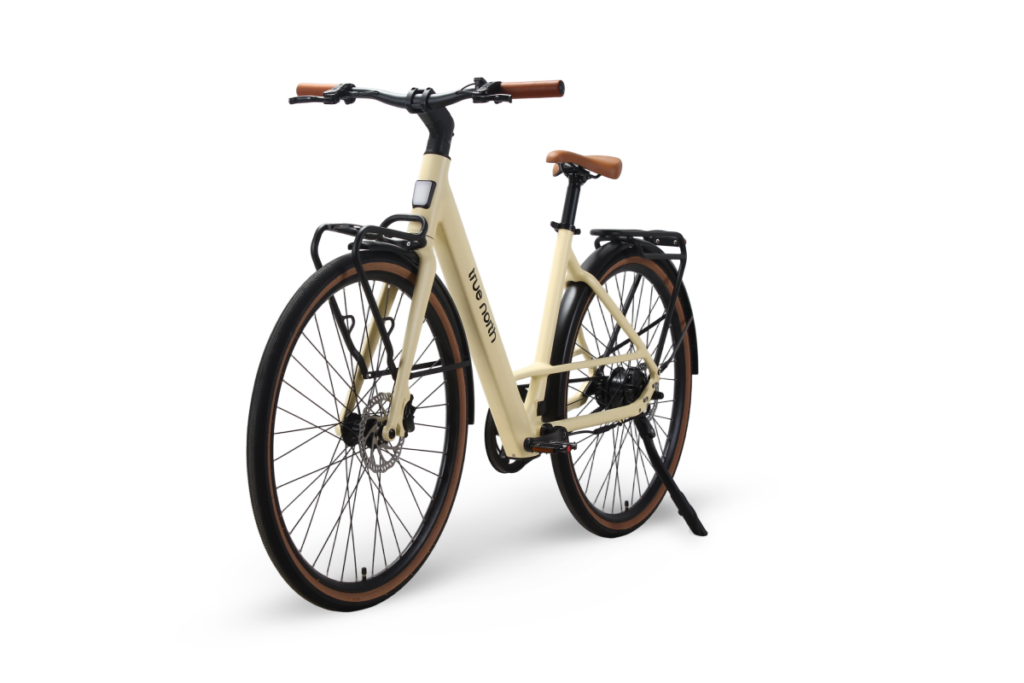
A practical reference point is the True North Finder, which meets all EPAC requirements for road use in every Australian state. It uses a 250 W continuous rated motor (450 W peak) with 45 Nm of torque, and limits assistance to 25 km/h. The Finder is tested to the EN 15194 standard, giving riders independent confirmation that its power, speed, electrical, and mechanical safety all meet recognised international requirements.
The motor stamp reads 250 W. The controller delivers 450 W peak for responsive starts and hill climbing. The torque sensor ensures that the peak power responds proportionally to your pedal effort rather than kicking in at full force. It is a good example of how a legal 250 W system can deliver a ride that feels significantly more capable than the number suggests.
Common questions
For most urban and suburban riding, yes. A well-tuned 250 W system delivers strong peak bursts of 400 W to 600 W for starts and hills. Ride feel depends on controller tuning and torque delivery, not the continuous watt number alone. A 250 W motor with 45 Nm of torque will outperform a cheap 500 W motor with 35 Nm on hills.
Watts measure how fast work is done. Torque measures turning force at the wheel. On hills and from standstills, torque determines performance. Two 250 W motors can feel very different because one delivers 30 Nm and the other 50 Nm. Always check the Nm rating alongside the watt rating.
Continuous power is the sustained output (the legal limit is 250 W). Peak power is the short burst for hills and acceleration (often 400 W to 600 W on a quality motor). The law measures continuous power. Peak power above 250 W is legal as long as the continuous rating is 250 W.
No. Regulators assess the motor’s designed and marked continuous rating and the assist behaviour, not changeable user settings. Queensland, Victoria, and NSW have all confirmed that “digitally limited” motors above 250 W are prohibited on public roads.
A controller that allows very high peak current feels punchier but creates heat stress. Used frequently, this can shorten the life of the controller and motor. A conservative controller sacrifices some snap for longevity. The continuous rating is unchanged; the system’s character and lifespan differ.
Read the permanent stamp on the motor hub or casing. This hardware rating defines the bike’s legal status, not changeable app settings. Ensure the stamp reads 250 W and verify the 25 km/h cut-off. A 500 W stamp is road-legal in NSW until 2029 but not in other states, and anything higher is not road-legal anywhere, regardless of any software restriction.
Summary
When shopping for an e-bike, the motor stamp is your starting point. If it reads 250 W continuous, the bike is road-legal nationwide, now and beyond 2029. A 500 W stamp is road-legal in NSW only and only until 2029; anything higher isn’t road-legal anywhere, and no software setting changes that. After confirming legality, look at peak power for ride feel, torque (Nm) for hill-climbing ability, and controller tuning for the character of the ride.
The 2026 regulatory shift has made this simpler than ever. NSW is moving to the national 250 W standard by 2029, and tighter federal import rules are clearing non-compliant bikes from the market. The only nationally legal, future-proof choice is a motor stamped 250 W continuous with EN 15194 certification and a 25 km/h cut-off.
For the full legal definitions and state-by-state rules, see our companion article: Continuous vs Peak Power: What It Means for Your E-Bike. For the complete buying decision framework, see our first-timer buyer’s guide. Or explore our range of EN 15194 certified e-bikes.