Last Updated: June 2026
Buying a legal e-bike in Australia should be simple. In practice, it is anything but. The market is flooded with bikes marketed as “street legal” that are nothing of the sort, certification stickers that prove safety but not legality, and retailers who offer to “unlock” your bike for extra speed without mentioning the fines, seizure risk, and insurance consequences.
2026 has brought more clarity than ever. NSW is phasing out its 500 W exception and moving to the national 250 W standard by 1 March 2029. The Federal Government has tightened imports of non-compliant bikes. Queensland is introducing fines of up to $6,700 and seizure powers from July 2026. The rules are converging on a single standard, and enforcement is catching up.
This guide is about the buying decision. It explains exactly what makes an e-bike legal, how to read certification stickers, how to avoid the most common traps, and what to check before you hand over your money. For the full legal framework by state, see our detailed article: E-Bike Laws in Australia (2026): Everything You Need to Know.
State-specific guides:
- NSW e-bike laws
- Victorian e-bike laws
- Queensland e-bike laws
- Western Australia e-bike laws
- South Australia e-bike laws
- ACT e-bike laws
Related guides:
- Continuous power vs peak power
- E-bike throttle rules in Australia
- The 1000 W debate: what’s legal and what’s not
- Do you need insurance for an e-bike?
Disclaimer: This article is for general information purposes only and should not be taken as legal or financial advice. Always verify current regulations with your state or territory transport authority.
The Three Rules Every Legal E-Bike Must Meet
In Australia, a legal e-bike is classified as an Electrically Power-Assisted Cycle (EPAC). If your bike meets the EPAC definition, it is treated as a bicycle: no registration, no licence, no compulsory insurance. If it doesn’t, it is an unregistered motor vehicle.
Every legal EPAC must meet three non-negotiable requirements. These apply in every state and territory as of April 2026, with no exceptions.
Rule 1: 250 W Continuous Rated Power
The motor’s maximum continuous rated power must not exceed 250 W. This is the sustained output the motor can produce indefinitely under standard test conditions, and it is the number stamped on the motor housing.
NSW is the only state that allows up to 500 W, and that exception is being phased out, with the 250 W standard taking full effect on 1 March 2029. A 500 W bike stays road-legal in NSW until then, but it isn’t legal in any other state. For a new purchase, 250 W is the only nationally legal and future-proof choice.
Continuous power is not peak power. A 250 W motor can legally produce 400 W or more in short bursts for hill starts and acceleration. The hardware rating is what matters. For a detailed explanation, read our article on continuous power vs peak power.
Rule 2: 25 km/h Speed Cut-Off
The motor must progressively reduce its assistance as you gain speed and stop entirely at 25 km/h. You can pedal faster than 25 km/h under your own power, but the motor cannot help you get there.
Rule 3: Pedal-Assist Only
The motor must operate only while you are pedalling. A throttle is permitted, but only for walk-assist up to 6 km/h. Above 6 km/h, the motor must only engage while the pedals are turning. If you can cruise at speed without pedalling, the bike is not an EPAC.
For the full breakdown of throttle types, see our e-bike throttle rules guide.
Understanding Certification: EN 15194 vs UL 2849
This is where thousands of Australian buyers get caught. Not all certification stickers mean the same thing, and one of the most common ones proves safety but not legality.
EN 15194: The Standard That Proves Legality
EN 15194 is the European standard for Electrically Power-Assisted Cycles. It is the bedrock of Australian e-bike law and the standard referenced by the Federal Import Ban.
What it tests: EN 15194 is a holistic standard. It verifies both safety (frame strength, battery reliability, electrical systems, anti-tamper provisions) and road compliance (it physically tests that the motor is 250 W, cuts out at 25 km/h, and requires pedalling). A bike certified to EN 15194 has been independently tested and confirmed to behave as a legal EPAC.
Why it matters: EN 15194 is the only standard accepted in every Australian state and territory. It is the standard required by the Federal Import Ban. If your bike carries an EN 15194 certification sticker, it is road-legal nationwide.
For more detail, read our guide to EN 15194 certification.
AS 15194: The Australian Equivalent
AS 15194 is the Australian version of the European standard. It is functionally identical for 250 W EPACs and is fully accepted as proof of compliance.
UL 2849: The Fire Safety Trap
UL 2849 is a US-based standard that has become well-known for its rigorous fire safety testing. It is excellent at ensuring your battery will not catch fire. However, UL 2849 does not test for road rules.
A bike can be UL 2849 certified and still have a 1,000 W motor, a full-speed throttle, and no speed cut-off. The certification proves the electrical system is safe from fire risk. It says nothing about whether the bike meets the EPAC definition.
NSW accepts UL 2849 as an electrical fire-safety certification pathway, but fire-safety certification is separate from road legality. Many brands used UL stickers to market high-powered bikes that were electrically safe but functionally illegal motorbikes. A UL sticker on its own has never proven road legality, and with imports tightening and NSW moving to the EN 15194 road standard, it’s more important than ever to check the EPAC requirements separately.
The rule is simple: if a bike is UL certified, check separately whether it also meets the 250 W / 25 km/h / pedal-assist requirements. If it does not, it is not a legal EPAC regardless of its fire safety rating.
The EN 15194 Label: What to Look For
A genuinely certified e-bike must display a permanent label with specific information. At a minimum, the label should show:
- The manufacturer’s name
- The words “EPAC according to EN 15194” (or “AS/NZS 15194”)
- The motor’s maximum continuous rated power (in watts)
- The pedal-assist cut-off speed (25 km/h)
- A serial number
If any of these are missing, ask the retailer for the EN 15194 certificate or Declaration of Conformity. A reputable seller will have this documentation readily available. If they cannot produce it, be cautious.
Five Traps to Avoid When Buying
Trap 1: The “Digitally Limited” Motor
Many retailers sell e-bikes with 750 W or 1,000 W motors and claim they are “limited to 250 W via software settings.” The law disagrees. Australian authorities assess the motor’s hardware rating, not its software configuration. If the motor is stamped 1,000 W by the manufacturer, it is a 1,000 W motor in the eyes of the law.
Queensland’s official regulations state that e-bikes with motors larger than 250 W that are “locked” or electronically limited to 250 W are prohibited from public use. Victoria’s position is the same. A software setting can be changed in minutes. The motor stamp cannot.
For more on this, read our article on the 1000 W debate.
Trap 2: The “Off-Road Only” Disclaimer
Powerful e-bikes (750 W to 2,000 W+) are often sold with labels like “For Private Property Use Only” or “Off-Road Only.” This is the seller telling you the bike is not road-legal. It is not a legal loophole.
Unless you own a farm or have access to a private racetrack, an “off-road only” e-bike is a machine you cannot legally use. Any public road, footpath, bike path, shared path, park, or state forest is off-limits.
Trap 3: The Full-Speed Throttle
If the throttle allows you to cruise at 25 km/h without pedalling, the bike is not an EPAC. It does not matter if the motor is rated at 250 W. The defining factor is whether the motor operates independently of pedalling at speeds above 6 km/h.
Test this before buying. With the bike powered on, use the throttle without pedalling. If the bike accelerates past walking pace (6 km/h), it is not compliant. See our throttle rules guide for the full breakdown.
Trap 4: The “Unlockable” Sales Pitch
If a salesperson offers to “unlock the speed limit” or “remove the 250 W restriction” after purchase, walk away. This is an offer to help you ride an unregistered motor vehicle. Anti-tamper provisions are part of the EN 15194 standard (2017+A1:2023), which specifically requires that the bike’s power-assist logic cannot be easily modified by the user.
A retailer willing to bypass compliance is likely cutting corners on battery safety and warranty support as well.
Trap 5: The Grey Import
Direct-to-consumer purchases from overseas sellers (Alibaba, AliExpress, direct-from-factory) carry significant risk. These bikes may be advertised as “250 W” or “Australian compliant” but lack EN 15194 certification, have uncertified batteries, or feature non-compliant throttles. Since December 2025, the Federal Government has been intercepting non-compliant e-bikes at the border.
Even if a grey import arrives at your door, you have no guarantee it meets Australian standards, no local warranty support, and no recourse if the bike causes a fire or is seized by police.
The Federal Import Ban: Why the Market Is Cleaning Up
Since December 2025, the Federal Government has banned the importation of e-bikes that do not meet the EN 15194 standard. This applies to commercial imports, direct-to-consumer online purchases, and grey imports shipped from overseas warehouses.
The practical effect is significant. The supply of non-compliant bikes in Australia is declining. Retailers who previously stocked 500 W and 1,000 W bikes are either transitioning their ranges or exiting the market. Replacement parts, batteries, and controllers for non-compliant systems will become harder to source over time.
For buyers, this is good news. The market is being cleared of the worst offenders, and the bikes that remain are more likely to be genuinely compliant. But legacy stock still exists on shop floors and in online warehouses, so vigilance is still required.
250 W Is Not Weak: Why Legal Bikes Perform Better Than You Think
A common concern among buyers is that a 250 W motor will not deliver enough power for hills, headwinds, or carrying loads. This concern is based on a misunderstanding of how motor power works.
Continuous rated power (250 W) is the sustained output. Peak power is the short burst for acceleration and hill starts. A quality 250 W motor can produce 400 W to 600 W in peak bursts. A well-designed mid-drive system with high torque (40 Nm to 95 Nm) will climb hills that a cheap 500 W hub motor with low torque (30 Nm to 40 Nm) cannot.
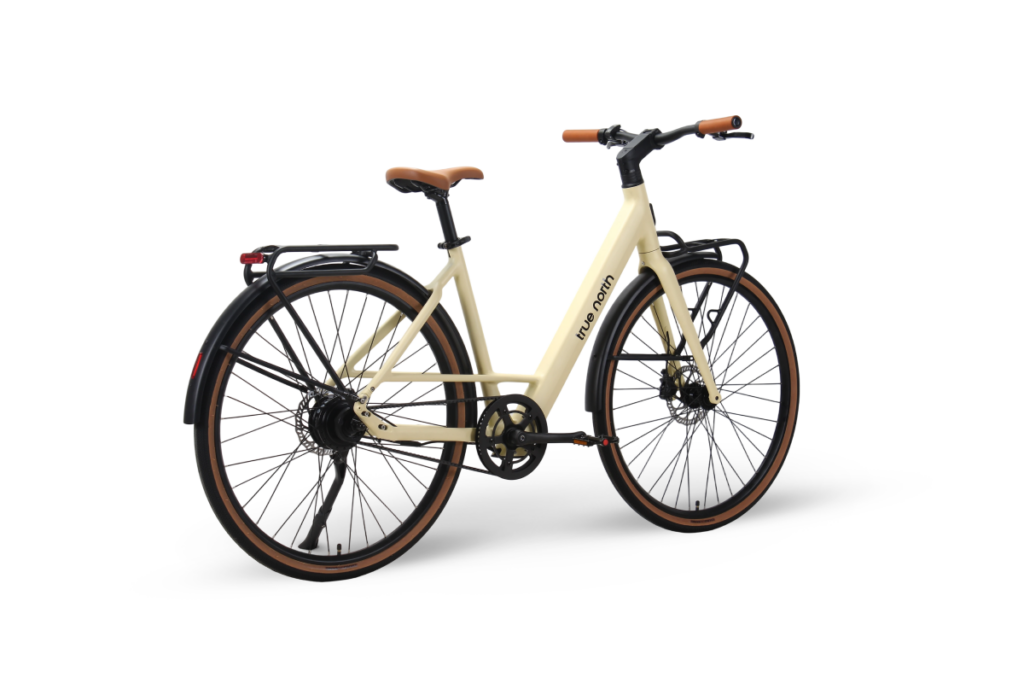
A practical reference point is the True North Finder, which meets all EPAC requirements for road use in every Australian state. It uses a 250 watt continuous rated motor (450 watt peak), and limits assistance to 25 kilometres per hour. The Finder is also tested to the latest EN 15194 (2023) standard, giving riders independent confirmation that its power, speed, electrical, and mechanical safety all meet recognised international requirements.
The Compliance Checklist: Before You Buy
Use this checklist at the shop or before clicking “purchase” online:
- Motor label reads 250 W. If it reads higher, the bike is not legal for road use, regardless of software settings
- EN 15194 (or AS 15194) certification sticker is present. Look for the full label with manufacturer name, “EPAC according to EN 15194,” continuous power, cut-off speed, serial number, and CE mark
- Throttle cuts out at 6 km/h without pedalling. Test it. If the bike accelerates past walking pace on throttle alone, it fails
- Motor cuts out at 25 km/h. Ask the retailer to demonstrate or test on a flat road
- No “unlock” or “off-road mode” options. A compliant EPAC should not have user-accessible settings to override the power or speed limits
- Charger carries the RCM mark. This confirms it meets Australian electrical safety standards
- Retailer can provide EN 15194 certificate or Declaration of Conformity. If they cannot produce documentation, be cautious
- Working pedals. A vehicle without functional pedals is not a bicycle under Australian law
What Happens If You Buy an Illegal Bike?
The consequences go beyond a fine:
Fines. Riding an unregistered motor vehicle carries fines from $686 (NSW) to $6,700 (QLD from July 2026). Multiple offences can be stacked in a single intercept.
Seizure and crushing. NSW and WA have existing seizure powers. NSW police can crush seized bikes under the March 2026 legislation. Queensland will gain the same powers from July 2026.
Insurance void. Home and contents policies, cycling membership cover, and specialist bike insurance all require the bike to meet the EPAC definition. An illegal bike is uninsurable. If you cause an accident, you are personally liable with no policy to fall back on.
No resale value. A non-compliant bike cannot be legally sold for road use. As enforcement tightens and the import ban reduces supply of parts, the resale market for these bikes is disappearing.
For the full insurance breakdown, read our guide: Do You Need Insurance for an E-Bike in Australia?
Frequently Asked Questions (FAQ)
EN 15194 (or its Australian equivalent, AS 15194). This is the only standard that tests both electrical safety and road compliance. It is accepted in every state and territory and is required by the Federal Import Ban. UL 2849 tests fire safety only and does not prove the bike meets the EPAC definition.
A 500 W EPAC remains road-legal to ride in NSW until 1 March 2029, but it has never been legal for road use in any other state, and it won’t meet the NSW standard after 2029. New e-bikes sold in NSW must also be electrically safety-certified from February 2026. For any new purchase, a 250 W EN 15194 certified bike is the only nationally legal and future-proof option.
Not without verification. Some imported bikes are labelled 250 W but have motors that produce significantly more power, or feature throttles that operate above 6 km/h. The safest way to verify compliance is to check for EN 15194 certification and test the throttle and speed cut-off before buying.
No. Australian authorities assess the motor’s hardware rating as stamped by the manufacturer, not software settings. Queensland and Victoria have both confirmed that bikes with motors “locked” to 250 W from a higher hardware rating are prohibited on public roads.
Continuous power is the sustained output (the legal limit is 250 W). Peak power is the short burst for hills and acceleration (often 400 W to 600 W on a quality 250 W motor). The law measures continuous power. Peak power above 250 W is legal as long as the continuous rating is 250 W.
In practice, no. To register as a motorcycle, the vehicle must meet Australian Design Rules (ADR) for motor vehicles, including compliant indicators, mirrors, brake lights, VIN numbers, and tyres. Most bicycle-style e-bikes cannot meet these standards.
Summary
Buying a legal e-bike in 2026 comes down to one certification and three numbers: EN 15194, 250 W, 25 km/h. If the motor is stamped 250 W continuous, the speed cuts out at 25 km/h, the throttle is limited to 6 km/h walk-assist, and the bike carries an EN 15194 certification sticker, you are legal in every state and territory. You can ride on every road, bike lane, and shared path. You are insurable. Your bike cannot be seized or crushed. And it will remain legal through every regulatory change happening in 2026 and beyond.
The traps are real: “digitally limited” motors, UL-only certification, grey imports, and “off-road only” disclaimers. But they are easy to avoid if you know what to check.
For the full legal picture by state, see our hub article: E-Bike Laws in Australia (2026): Everything You Need to Know. Or explore our range of EN 15194 certified e-bikes.