Last Updated: April 2026
Understanding e-bike throttle rules in Australia is essential for any rider looking to purchase a new e-bike in 2026. While the convenience of a throttle is undeniable, offering a quick start at traffic lights or a helping hand with heavy loads, the distinction between a compliant electric bicycle and an illegal unregistered motorbike is strictly enforced. Enforcement is tightening further: Queensland is introducing seizure and crushing powers from July 2026, and NSW police are trialling portable dyno units for roadside testing.
This guide clarifies the regulations, explains the specific differences between walk-assist, pedal-activated boost, and throttle-only operation, and provides a clear checklist to ensure your bike keeps you on the right side of the law.
For the broader legal context, see our hub article: E-Bike Laws in Australia (2026): Everything You Need to Know. We’ve also written detailed guides on related topics:
- Continuous power vs peak power
- What is EN 15194 certification?
- The 1000 W debate: what’s legal and what’s not
- NSW e-bike laws
- Do you need insurance for an e-bike?
Disclaimer: This article is for general information purposes only and should not be taken as legal advice. E-bike regulations vary across states and territories. Always check your local laws before riding.
Is It Legal to Have a Throttle on an Electric Bike in Australia?
The answer is yes, but its function is strictly limited.
Under the national Electrically Power-Assisted Cycle (EPAC) definition, which aligns with the EN 15194 standard, a throttle is permitted only if it acts as a supplementary aid rather than the primary mode of propulsion. To remain street-legal, a throttle must operate within two specific limits.
The Three Types of Throttle Operation
Not all throttle use is the same under Australian law. There are three distinct categories, and only the first two are legal on public roads.
1. Walk-Assist Mode (Legal)
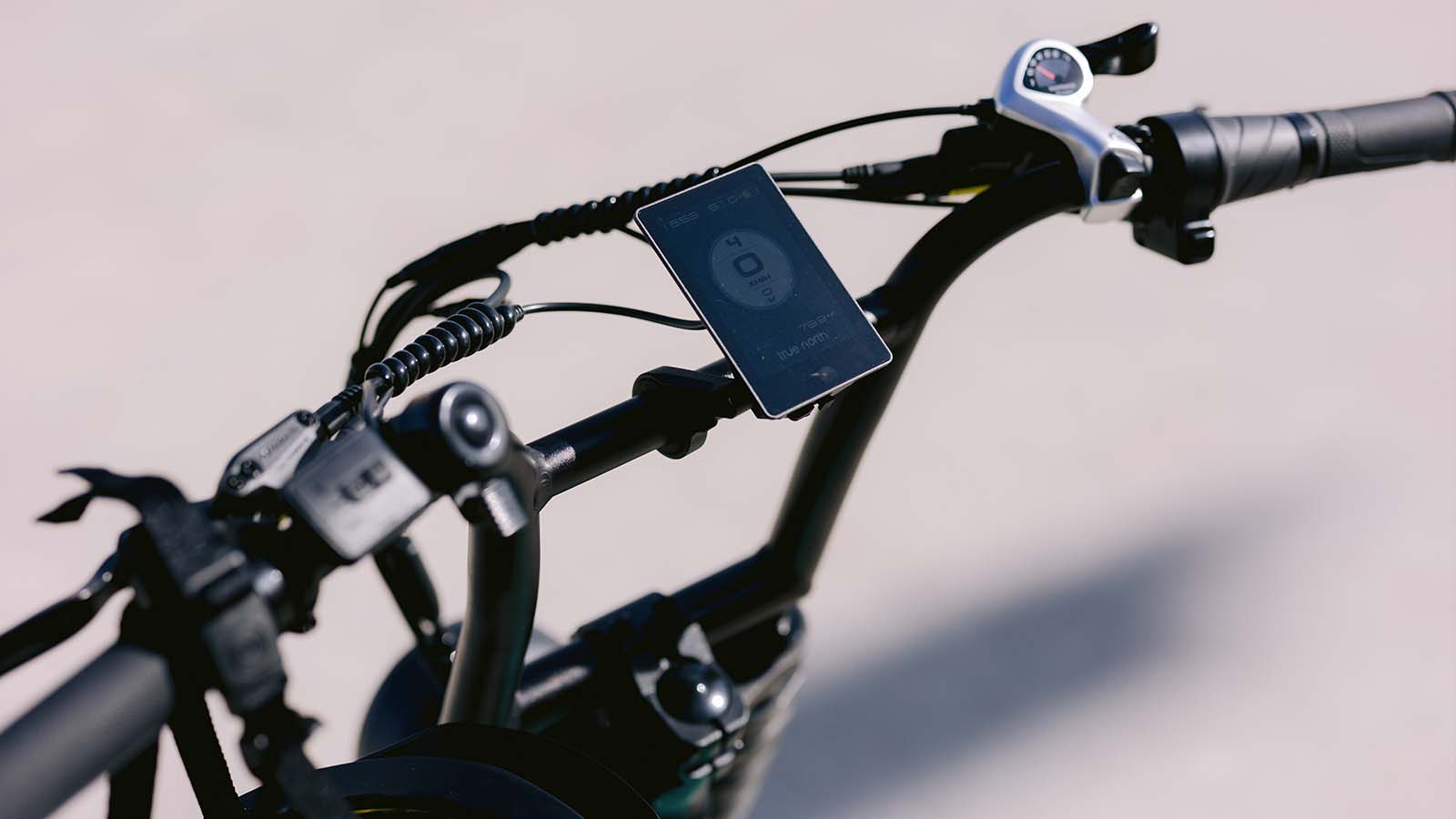
Walk-assist allows you to use the throttle to propel the bike from a standstill without pedalling, but the motor must cut out once the bike reaches 6 km/h. This feature is designed purely to help you get moving from a stop, push the bike up a driveway, or walk it up a ramp. Your feet do not need to be on the pedals. The motor simply nudges the bike forward at walking pace.
Every compliant EPAC with a throttle uses this mode. It is the standard “throttle” experience on a legal e-bike.
2. Pedal-Activated Boost (Legal)
Some e-bikes feature a throttle or boost button that provides additional power at speeds above 6 km/h, but only while you are simultaneously pedalling. The moment you stop pedalling, the motor must stop. This is sometimes called “pedal-boost” or “pedal-activated throttle.”
The key distinction: the throttle does not work independently above 6 km/h. It amplifies pedal-assist power, but the pedals must be turning for the motor to engage. Think of it as a turbo button that only works while you’re already pedalling.
This feature is found on some rental fleet e-bikes and certain consumer models. It is legal because it meets the core EPAC requirement: the motor only operates while you pedal.
3. Throttle-Only / Full Throttle (Illegal on Public Roads)
If your throttle allows you to sit on the saddle, twist the grip, and cruise at any speed above 6 km/h without moving your legs, the bike is not classified as a bicycle. It is an unregistered motorbike and is illegal to use on public roads, bike lanes, shared paths, and footpaths.
This applies regardless of the motor’s power rating. Even a 250 W motor is illegal if the throttle allows independent cruising above 6 km/h. The defining factor is not the power, it is whether the motor operates without pedalling at speeds above walking pace.
The golden rule: if you can cruise without pedalling, it’s not a legal e-bike.
Pedal-Assist vs Throttle vs Walk-Assist: What’s Legal Where
This comparison applies uniformly across every Australian state and territory as of 2026:
| Feature | How It Works | Legal on Public Roads? |
|---|---|---|
| Pedal-assist (PAS) | Motor engages only while you pedal. Assistance reduces progressively and stops at 25 km/h. No throttle input needed. | Yes. This is the standard for all legal EPACs. |
| Walk-assist throttle | Throttle propels the bike up to 6 km/h without pedalling. Motor cuts out at 6 km/h. | Yes. Permitted on all legal EPACs. |
| Pedal-activated boost | Throttle or boost button adds extra power, but only while you are simultaneously pedalling. Cuts out when you stop pedalling. | Yes. Meets the EPAC definition because motor only operates while pedalling. |
| Throttle-only cruising | Throttle propels the bike above 6 km/h without pedalling. Rider can cruise without moving their legs. | No. Bike is classified as an unregistered motor vehicle. Fines, seizure, and crushing may apply. |
These rules apply in NSW, Victoria, Queensland, Western Australia, South Australia, Tasmania, ACT, and the Northern Territory. There are no state-level exceptions for throttle-only operation.
Queensland July 2026: Tougher Enforcement on Throttle-Only E-Bikes
Queensland has introduced new e-bike legislation to parliament that, if passed as expected, will take effect from 1 July 2026. The reforms significantly strengthen enforcement against non-compliant e-bikes, including throttle-only machines.
Under the proposed laws:
- Seizure and destruction powers: Police will be able to seize and destroy e-bikes that do not meet the EPAC standard. A throttle-only e-bike that cruises above 6 km/h without pedalling would qualify for seizure
- Fines from $330 to $6,700 depending on the offence
- Licensing requirement: All e-bike riders over 16 will need at least a learner’s driver’s licence
- Hooning offences: New offences target riders who organise meets to film and post illegal riding on social media, which often involves throttle-only bikes performing scooter-style riding
The QLD reforms are a direct response to safety concerns. Twelve deaths in e-device incidents in 2025 and thousands of hospitalisations drove the parliamentary inquiry that led to the legislation. Throttle-only e-bikes, which allow inexperienced riders to reach speeds without pedalling, were specifically identified as a risk factor.
For the full breakdown, see the Queensland section of our E-Bike Laws in Australia guide.
NSW: Seizure and Crushing Powers Now Active
NSW introduced seizure and crushing powers in March 2026 under the Road Transport Amendment (Non-registrable Motor Vehicles) Bill 2026. Police can now confiscate throttle-only e-bikes on the spot, and confiscated bikes may be destroyed.
NSW police are also trialling portable dyno units for roadside speed and power testing. These allow officers to test whether your bike’s throttle operates independently above 6 km/h, rather than relying on visual inspection alone.
Operation Kilowatt on Sydney’s Northern Beaches in 2025 resulted in 28 non-compliant e-bikes identified in one month, with fines of $818 per offence. Many of the bikes targeted were throttle-only fat tyre models marketed as e-bikes but functioning as unregistered motorbikes.
For full NSW details, see our NSW e-bike laws guide.
How to Test Your E-Bike’s Throttle Compliance
If you already own an e-bike with a throttle, or you are considering buying one, here is a simple test you can perform:
Step 1: Start from a standstill. With the bike powered on and in a safe area, use the throttle without pedalling. The motor should engage and move the bike forward gently.
Step 2: Watch the speed. The motor must cut out at or before 6 km/h if you are not pedalling. Most compliant bikes will feel the motor disengage at a gentle walking pace. If the bike continues to accelerate past 6 km/h on throttle alone, it is not compliant.
Step 3: Test at speed. While riding at 15 to 20 km/h, stop pedalling and use the throttle. On a compliant EPAC, the motor should either cut out immediately or only provide assistance up to 6 km/h. If the motor continues to drive the bike at speed without your legs moving, the throttle configuration is illegal for road use.
Step 4: Check the paperwork. Look for EN 15194 certification. This standard enforces the pedal-assist logic in the bike’s firmware. If the bike is certified to EN 15194, the throttle configuration is almost certainly compliant. For more on what this certification covers, read our article on EN 15194 certification.
What About Aftermarket Throttle Modifications?
Some riders purchase compliant e-bikes and then install aftermarket throttles, controllers, or firmware modifications to enable full-throttle operation above 6 km/h. This is illegal.
Modifying a compliant e-bike to allow throttle-only cruising above 6 km/h changes its legal classification from a bicycle to an unregistered motor vehicle. The EN 15194 standard (2017+A1:2023) specifically requires that the bike’s power-assist logic cannot be easily modified by the user. Anti-tamper provisions are part of the certification.
If your bike was originally certified to EN 15194 and you modify the throttle settings, the certification is void. You are riding an unregistered motor vehicle, and you lose all insurance cover as well.
Why Some E-Bikes Feel Like They Have Full Throttle (But Don’t)
Some riders find that their compliant EPAC’s throttle feels powerful enough to seem like full-throttle operation. This is usually because the pedal-activated boost system is well-engineered: it provides strong assistance the moment you begin pedalling, creating a sensation of instant power.
On bikes with torque sensors, even light pressure on the pedals activates the motor at full assist. The throttle button may add a surge on top of this. The result can feel like throttle-only power, but the motor is only operating because the pedals are turning. This is compliant.
The distinction that matters to regulators is simple: does the motor stop when you stop pedalling? If yes, the bike is compliant. If no, it is not.
Frequently Asked Questions
Is it legal to have a throttle on an electric bike in Australia? Yes, but with strict limitations. A throttle is legal if it is restricted to 6 km/h without pedalling (walk-assist mode). Some e-bikes also feature a pedal-activated boost where the throttle only provides power while you are simultaneously pedalling. Any throttle that propels the bike above 6 km/h without the rider pedalling is illegal on public roads.
Can I use a throttle to start from a standstill? Yes. Walk-assist mode allows you to use the throttle to move the bike from a standstill up to 6 km/h without pedalling. This is designed for getting started at traffic lights, pushing the bike up driveways, or walking it alongside you. Beyond 6 km/h, you must be pedalling for the motor to operate.
Are throttle-only e-bikes legal anywhere in Australia? No. Throttle-only e-bikes that allow cruising above 6 km/h without pedalling are classified as unregistered motor vehicles in every state and territory. There are no exceptions. To ride a throttle-only vehicle on public roads, it would need to be registered as a moped or motorcycle, with appropriate licensing and insurance.
What happens if I’m caught on a throttle-only e-bike? You face fines for riding an unregistered motor vehicle, riding uninsured, and potentially riding unlicensed. In NSW, fines start at $818 per offence. In Queensland (from July 2026), fines range from $330 to $6,700. Police in both states can seize the bike, and it may be crushed.
Does the True North Finder have a throttle? The True North Finder is a pedal-assist e-bike with a walk-assist throttle limited to 6 km/h. Above 6 km/h, the motor operates only while you are pedalling. It is EN 15194 certified and fully compliant with Australian e-bike laws in every state and territory.
Summary
Throttle-equipped e-bikes can be practical, offering useful help for heavy starts or steep driveways. However, in Australia, the core principle remains “pedal first.”
Walk-assist throttles that help you start up to 6 km/h are permitted. Pedal-activated boost systems that provide extra power while you are pedalling are permitted. Throttles that allow you to cruise like a scooter without pedalling are illegal on public roads in every state and territory, with penalties including fines, seizure, and crushing.
The enforcement environment is intensifying. NSW has seizure and crushing powers active now. Queensland’s July 2026 reforms add fines of up to $6,700 and expanded police powers. Choosing a model with EN 15194 certification ensures your ride is compliant and future-proof.
For a complete breakdown of the broader legal landscape, read our hub article: E-Bike Laws in Australia (2026): Everything You Need to Know. Or explore our range of EN 15194 certified e-bikes.